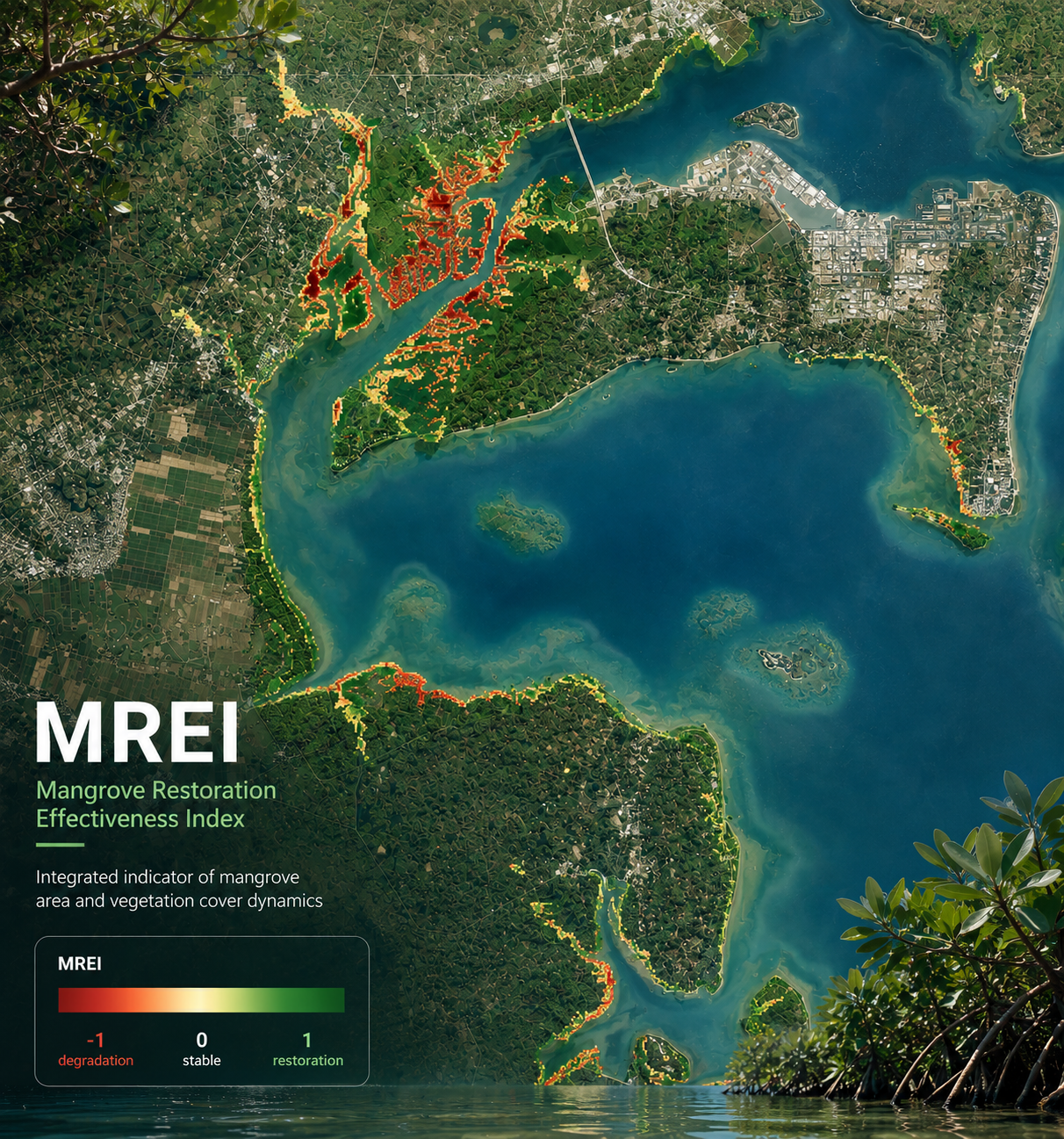
MREI
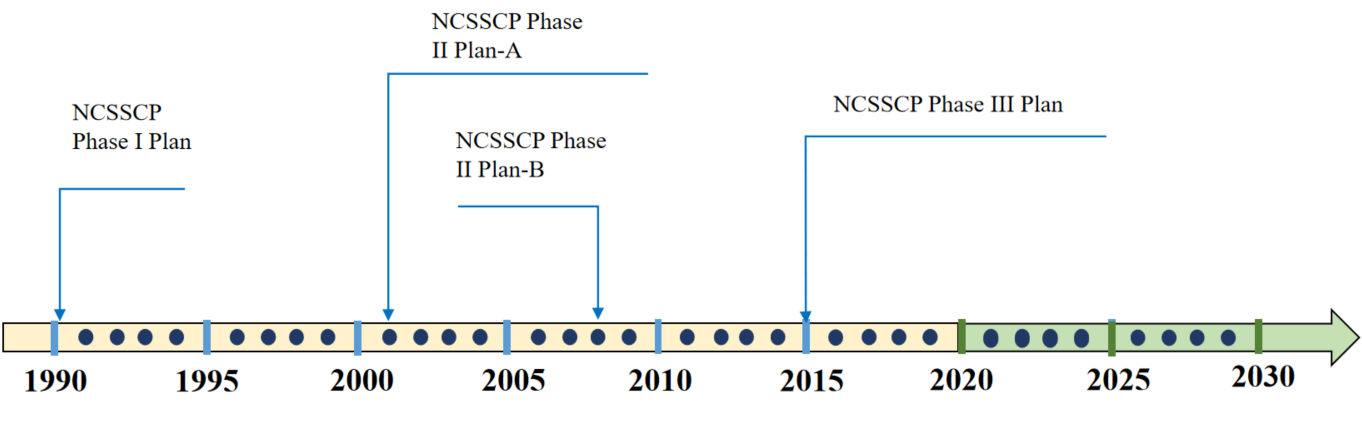
China launched the National Coastal Shelterbelt System Construction Project (NCSSCP) in 1988, with mangrove planting and restoration identified as key components. Since 1990, multiple phases of the NCSSCP have been implemented to promote large-scale mangrove restoration and coastal ecological protection. The project has continuously expanded in both spatial extent and restoration objectives, with the latest phase aiming to restore approximately 48,650 ha of mangroves by 2025.
Methods
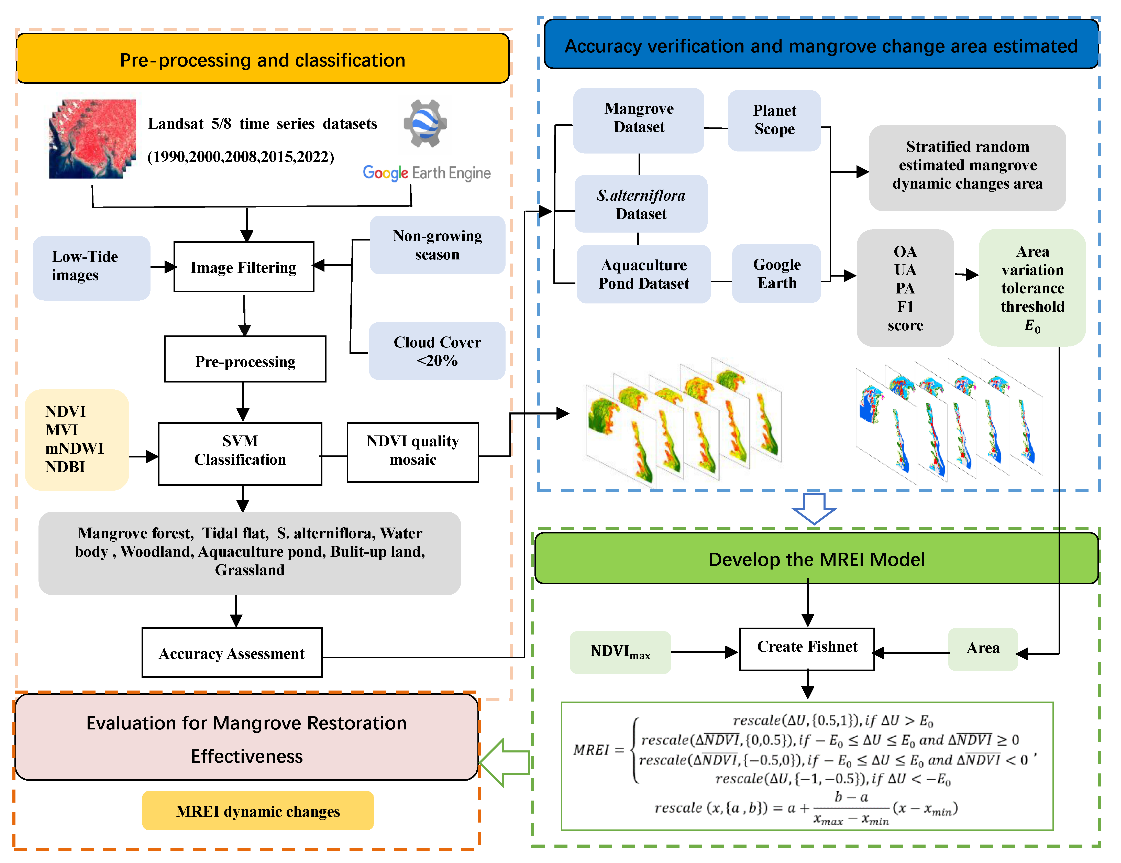
The Landsat-series images were pre-processed, and land cover types in 1990, 2000, 2008, 2015, and 2022 were classified. At the same time, the maximum NDVI for each year was calculated to represent the growth condition of mangroves. Mangrove changes were then divided into four categories, and the area of each class was estimated using a stratified random sampling method.
Next, the Mangrove Restoration Effectiveness Index (MREI) was developed by considering both mangrove area change and NDVI change between the start year and the end year of each period. Since MREI only evaluates restoration effectiveness within a single period, a Process-based Restoration Effectiveness Index (PREI) was further developed based on the trajectory of MREI changes to assess the persistence of restoration effectiveness throughout the entire evaluation period (1990-2022).