TRPMM
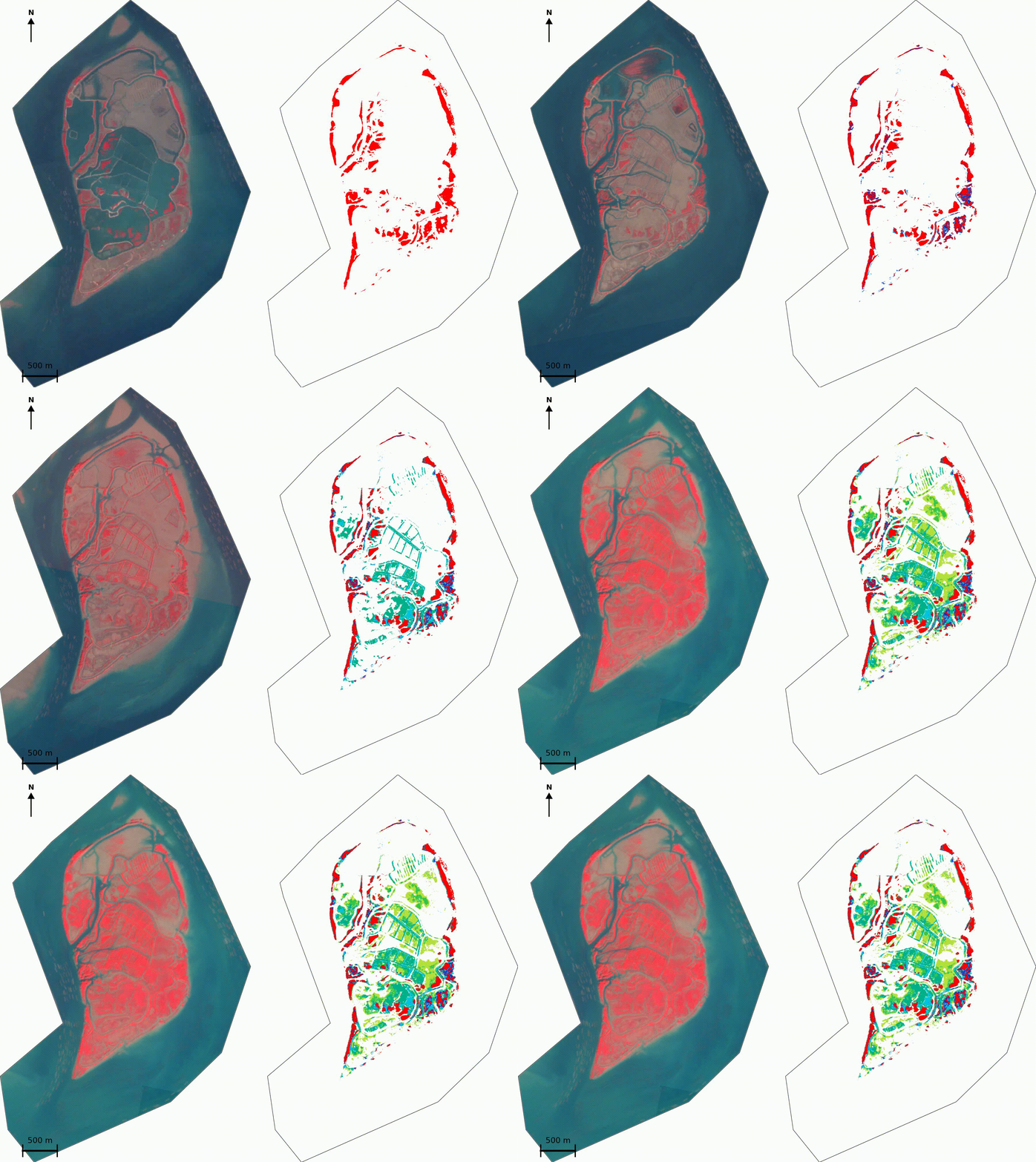
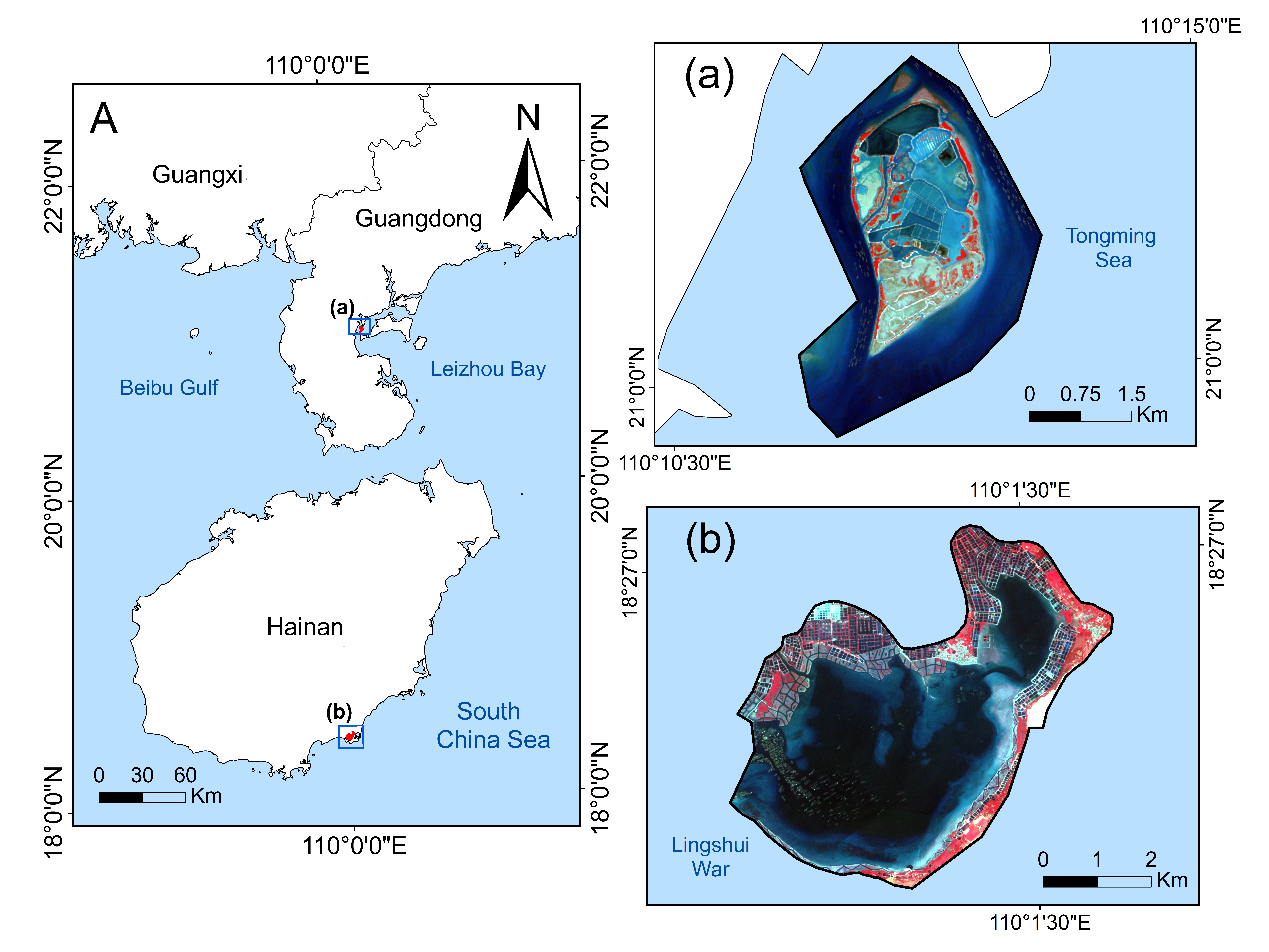
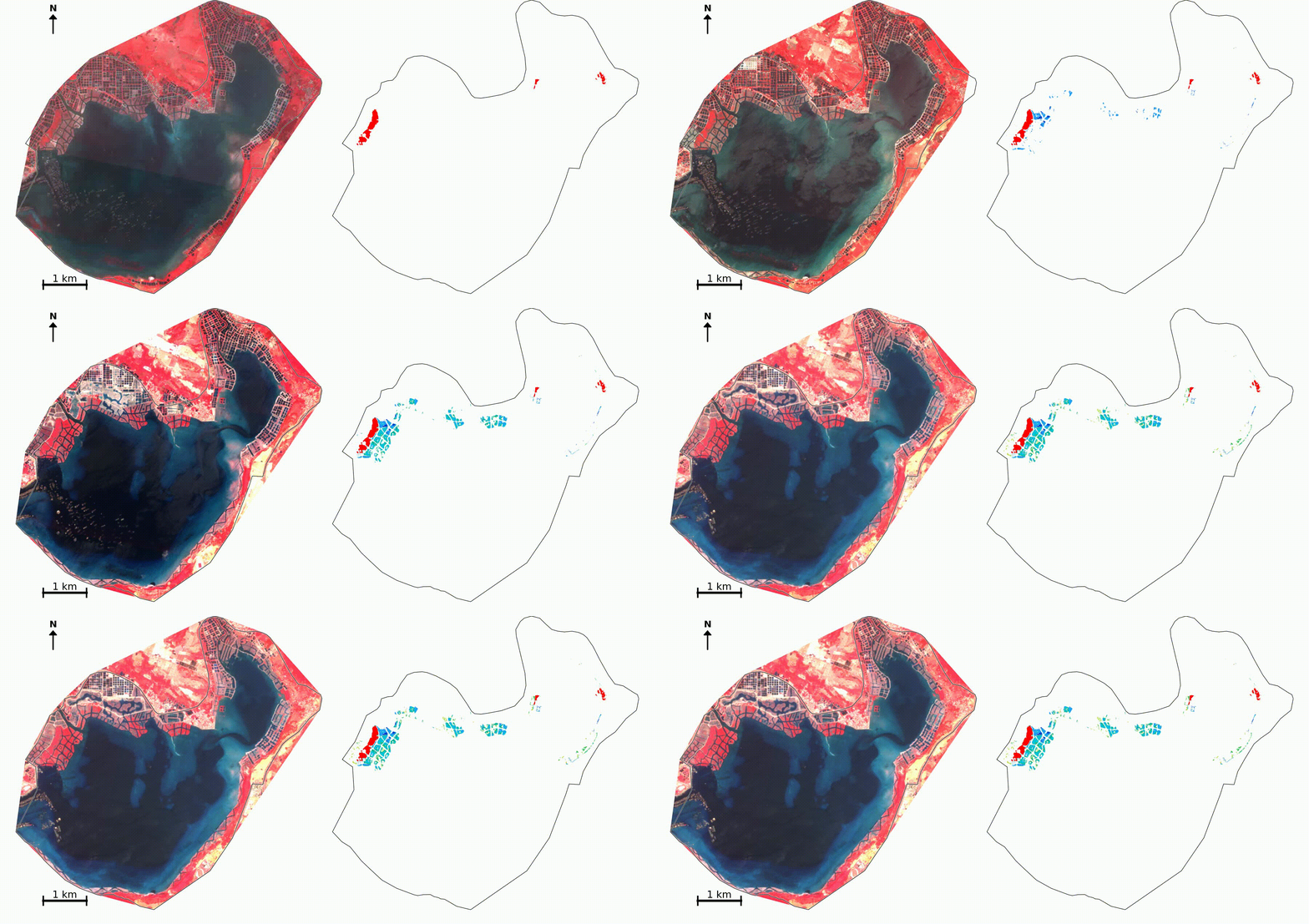
Two study areas were selected in this study: the Zhanjiang Mangrove National Nature Reserve (ZMNNR) and the Lingshui Mangrove National Wetland Park (LMNWP), both of which experienced intensive mangrove planting activities during 2016-2023.
Methods
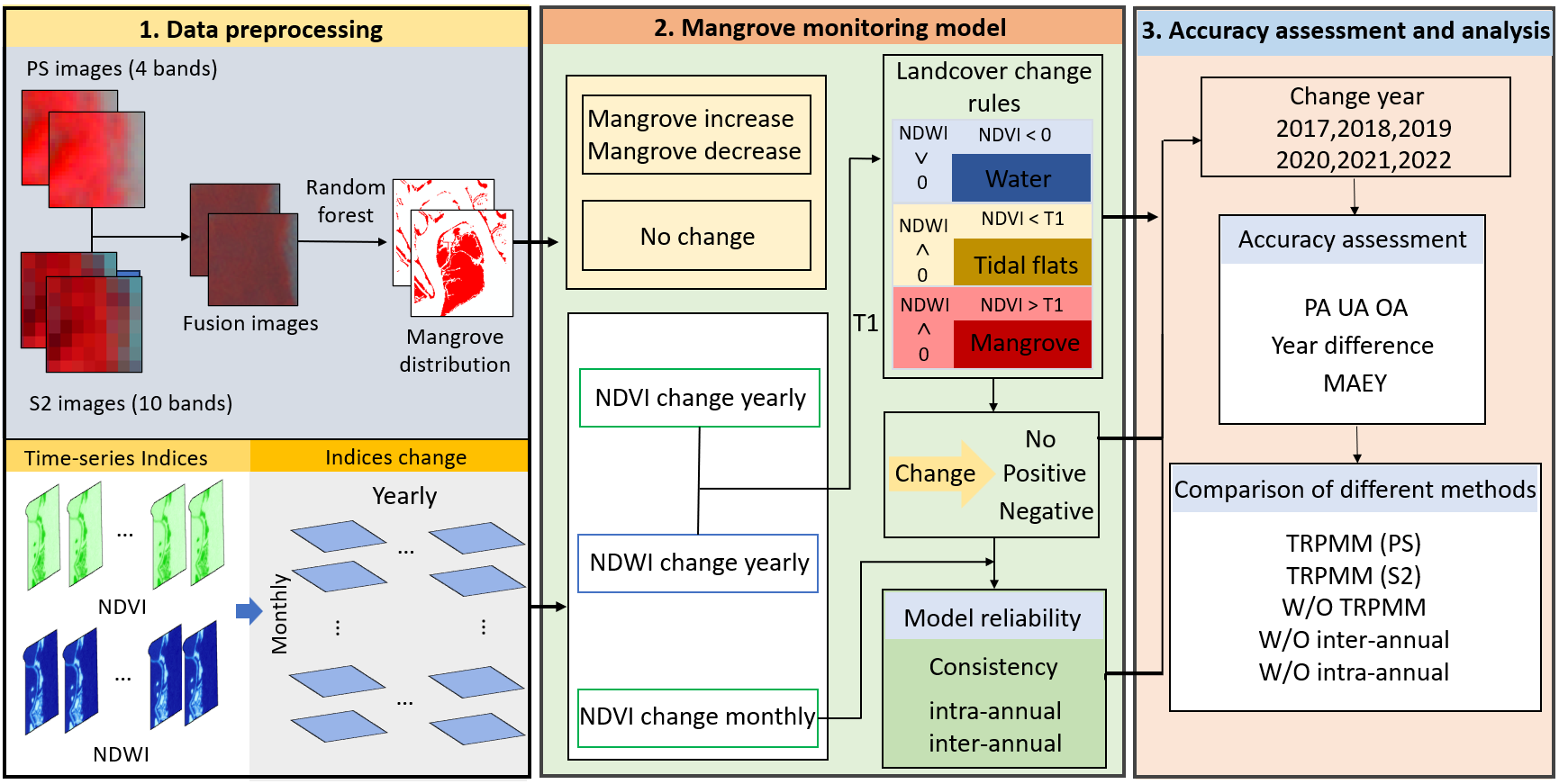
In this study, the 3 m PlanetScope imageries were organized into a two-dimensional network structure to represent both intra-annual and interannual time series. Interannual changes were used to determine whether mangrove changes occurred, while intra-annual variations were incorporated to ensure monitoring reliability. Unlike conventional one-dimensional time-series analysis, this approach fully utilizes all imagery from both intra-annual and interannual time series.
To reduce the influence of other wetland vegetation on mangrove identification, the potential distribution range of mangroves was extracted prior to monitoring. Considering that mangroves are periodically inundated by water and therefore have growth environments different from terrestrial vegetation, monitoring based solely on NDVI time-series changes may lead to inaccuracies. Therefore, a threshold- and rule-based method, namely TRPMM, was developed by integrating time-series NDWI (Normalized Difference Water Index) and NDVI.
Finally, the accuracy of the proposed method for annual mangrove expansion monitoring in mangrove planting areas was evaluated, and the advantages and limitations of the method were further discussed.
Annual Mangrove Dynamics
LMNWP
ZMNNR